Key Takeaways
- A custom stand is designed for one brand, one space and one set of goals, and is built on a raw-space booking.
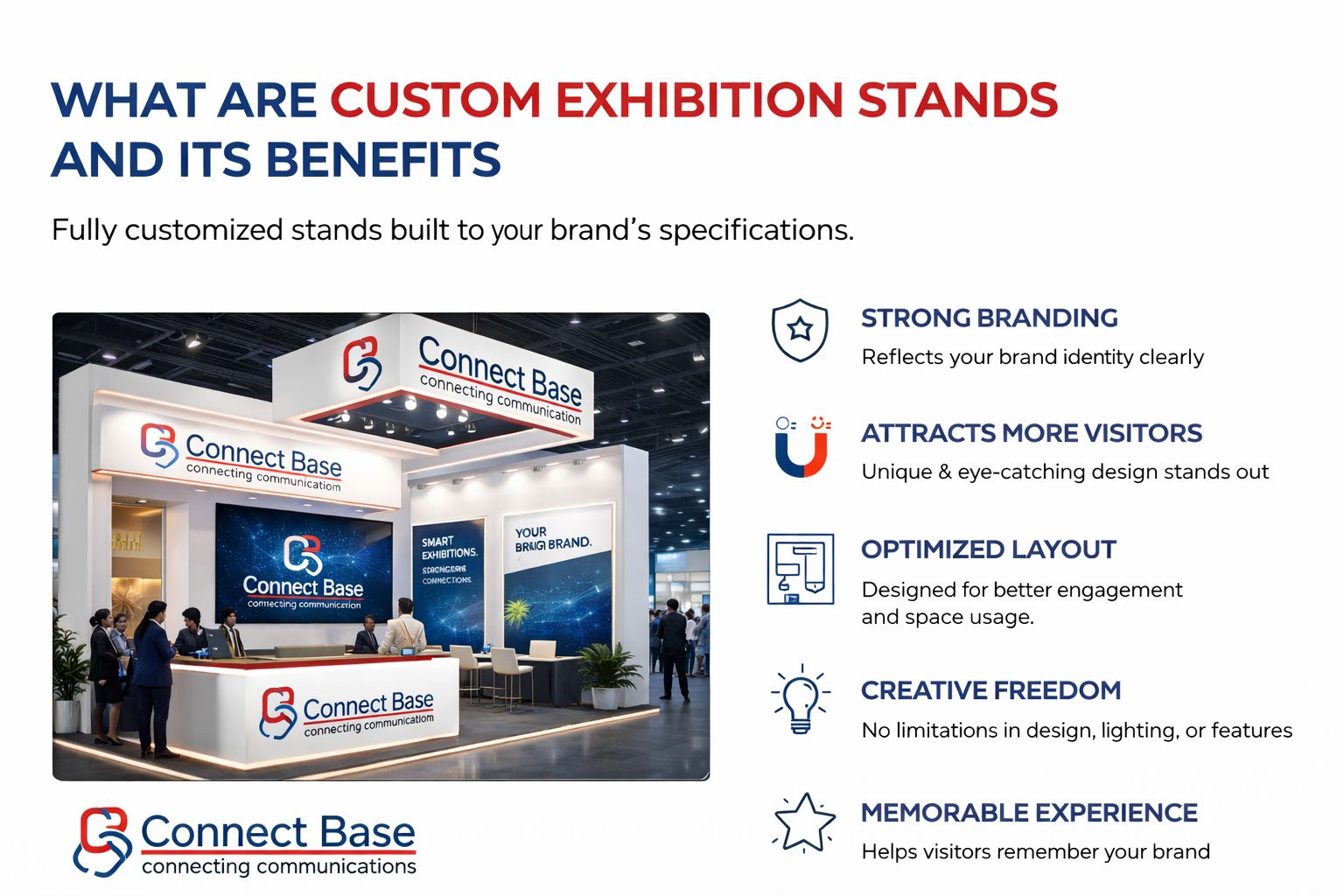
- Its main benefits are a layout that follows your sales process, stronger brand expression and built-in lighting and technology.
- The trade-offs are higher cost per show, longer lead time, limited reuse and storage if you keep the stand.
- Custom suits major shows, larger open-sided spaces and heavy or live displays; modular suits frequent smaller shows.
- Brief clearly, approve a 3D design first and freeze changes early to get the most from a custom build.
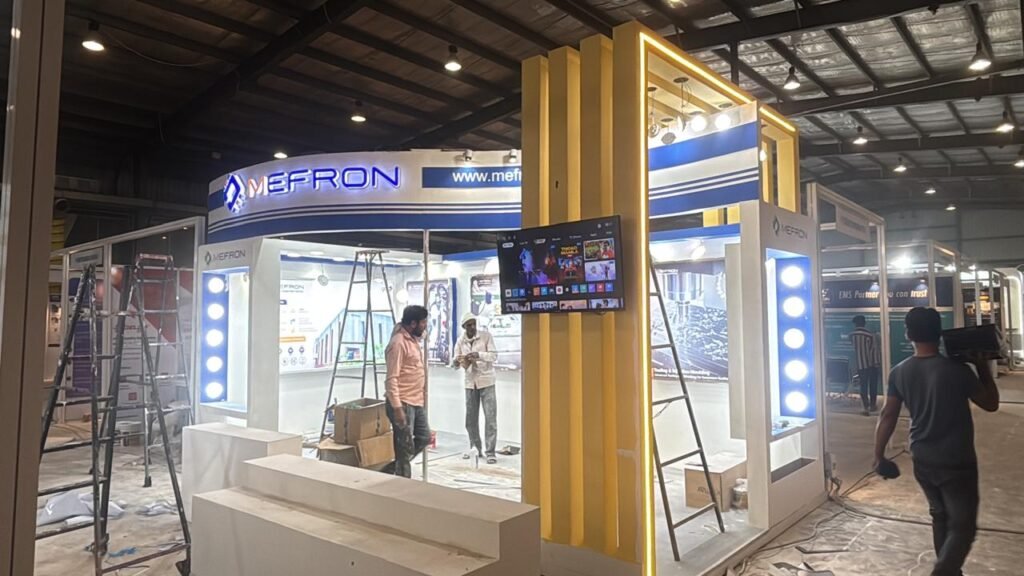
A custom exhibition stand is a stall designed and built for one brand, one space and one set of goals, rather than assembled from a standard kit. This article explains what a custom stand is, what it does well, where its limits are, and how to decide whether custom or modular is the better choice for your next show.
What is a custom exhibition stand?
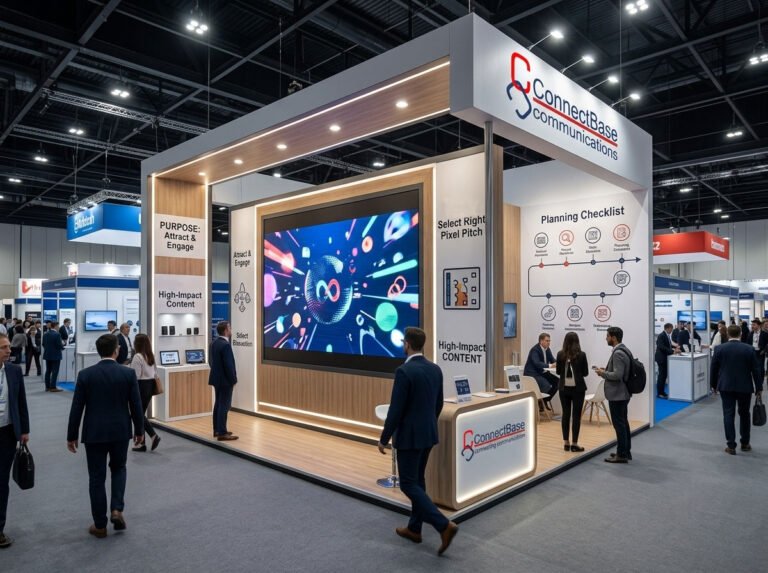
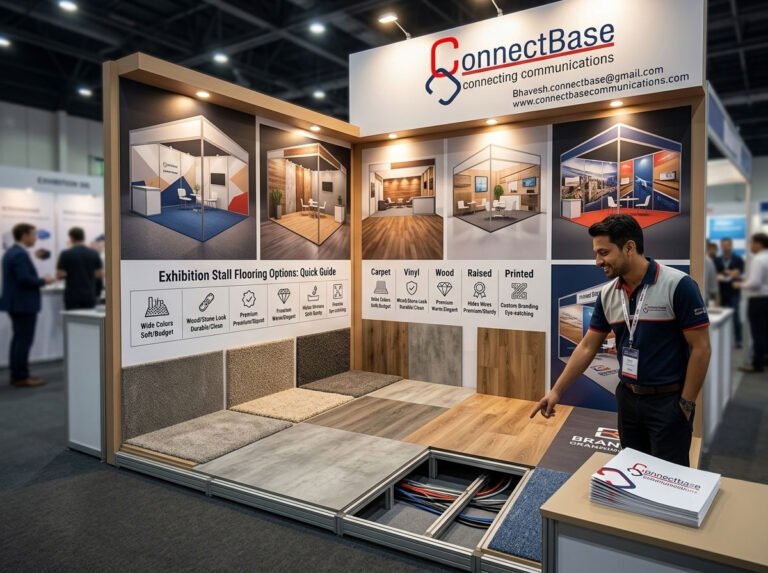
A custom stand starts from a blank floor plan. The designer works from your brief, the stall size and the organiser’s rules, and produces a structure that does not follow a fixed template. In India, custom stands are usually fabricated from wood and MDF, finished with paint, laminate or veneer, and combined with materials such as glass, acrylic, metal and fabric. Lighting, graphics, storage and AV equipment are designed into the structure rather than added afterwards.
Custom stands are built on raw-space bookings, where the organiser provides bare floor and the exhibitor’s contractor builds everything. They range from a 9 or 12 sq m stall with a distinctive back wall to a 36 sq m or larger island stall with a meeting room, storage and a raised platform.
A modular stand, by comparison, is built from a reusable system of frames and panels, often aluminium, with graphics changed for each event. It is quicker to install and easier to reuse, but the shapes and finishes are limited by the system.
Benefits of a custom stand
A layout built around how you sell
The biggest practical advantage is that the layout follows your sales process. A machinery company can plan a demo zone with the right floor loading and power points. A jewellery brand can build secure display counters at the right height. A company that closes deals at the show can add a private meeting room. Visitor flow can be planned from the aisle to the product display to the discussion area, instead of fitting activities into a fixed grid.
Brand expression beyond the logo
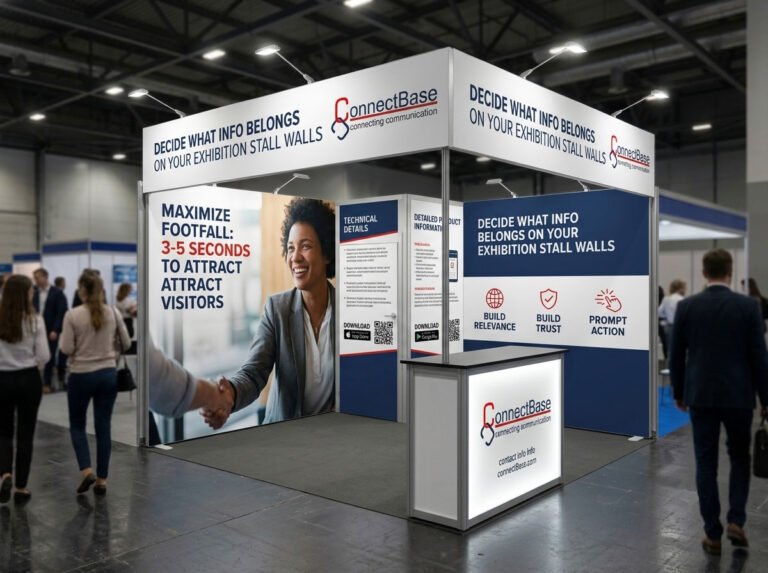
With a custom build, the shape of the structure, the materials, colours and lighting can all reflect the brand. A sustainable brand might use natural finishes and exposed timber; an engineering company might choose a cleaner, technical look. Every element, from the fascia to the counter graphics, can carry the same message, which helps visitors understand what you do from the aisle.
Integrated lighting and technology
Screens, touch panels, product spotlights and cove lighting can be built into walls and counters, with cables concealed inside the structure. This gives a tidy, professional result and avoids loose wiring and stand-alone screens on trolleys.
Finish and perceived quality
Visitors look at a stall from close range. Clean joinery, good paint finish and properly fitted graphics signal that the company pays attention to detail. A custom build gives you control over these finishes, which matters for brands whose products are premium or precision-made.
One team handling the whole job
When the same stall builder designs, fabricates, transports, installs and dismantles the stand, your team does not have to coordinate separate vendors. They can focus on visitors and meetings during the show.
Limits of a custom stand
Custom stands are not the right answer for every exhibitor, and it helps to be clear about the trade-offs:
- Higher cost per show: design, materials and skilled labour cost more than renting or reusing a modular system. Our exhibition stall cost guide for India explains what drives the price.
- Longer lead time: the design has to be approved, drawings submitted to the organiser and the stall fabricated before the show, so late bookings leave less room.
- Limited reuse: many wood and MDF stands are built for one event. Parts such as counters, display units or lightboxes can sometimes be reused, but the full structure rarely fits a different stall size or shape.
- Storage and transport: if you do plan to reuse a custom stand, it needs careful packing, transport and storage between shows.
When custom is the right choice and when modular is better
Custom usually makes sense when:
- The show is a major event in your industry and your key buyers will be there.
- You have a larger or open-sided space, such as a corner or island stall, where a standard system would look plain.
- You need specific functions: heavy product displays, live demonstrations, meeting rooms or a launch area.
- Brand presentation and finish quality are important to how customers judge you.
Modular is often the better choice when you exhibit at many smaller shows, use similar stall sizes each time, have a tight budget per event, or need a quick turnaround. Some exhibitors combine the two, with a modular structure and custom-built counters or feature walls. We compare both options in more detail in custom vs modular exhibition stalls.
How to get the most from a custom stand
- Brief clearly: share your goals, products to display, number of staff, meeting needs, brand guidelines and the organiser’s manual at the start.
- Approve a 3D design first: check heights, sightlines, product placement and graphics before fabrication. Our article on why every custom stall should start with a 3D design explains what to look for.
- Decide what should be reusable: if you exhibit often, ask for display units, counters or lightboxes that can travel to future shows.
- Freeze changes early: late changes to a custom build are expensive and put the finish at risk.
Choosing a partner for a custom build
A custom stand is only as good as the team that designs and builds it. Connectbase Communications has designed and fabricated exhibition stalls since 2009, with an in-house design team and our own production facilities in Ahmedabad, Mumbai and Delhi. We handle 3D design, custom wood and MDF fabrication as well as modular systems, graphics, lighting, AV, transport and on-site setup. You can see how we work on our exhibition stall fabrication services page.
If you are deciding between a custom and a modular stand for an upcoming show, contact us or call +91 7600576410 to discuss your space and requirements.