
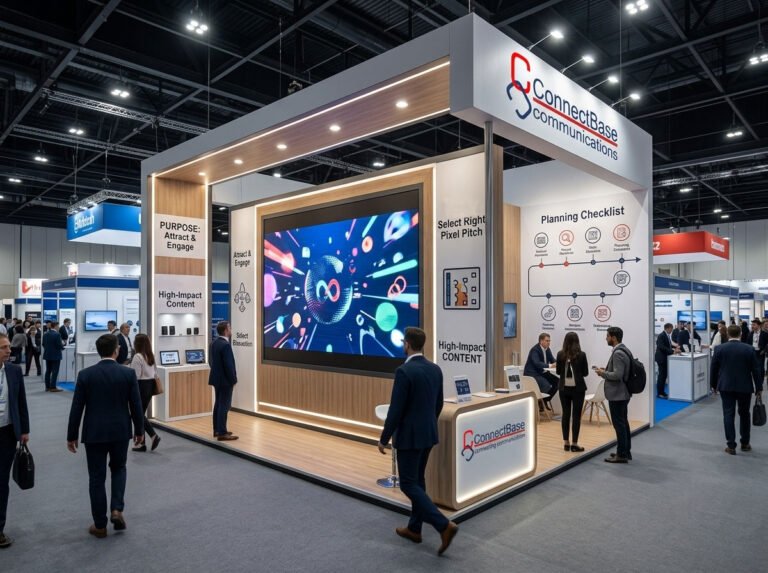
Exhibition Stall Design & Fabrication
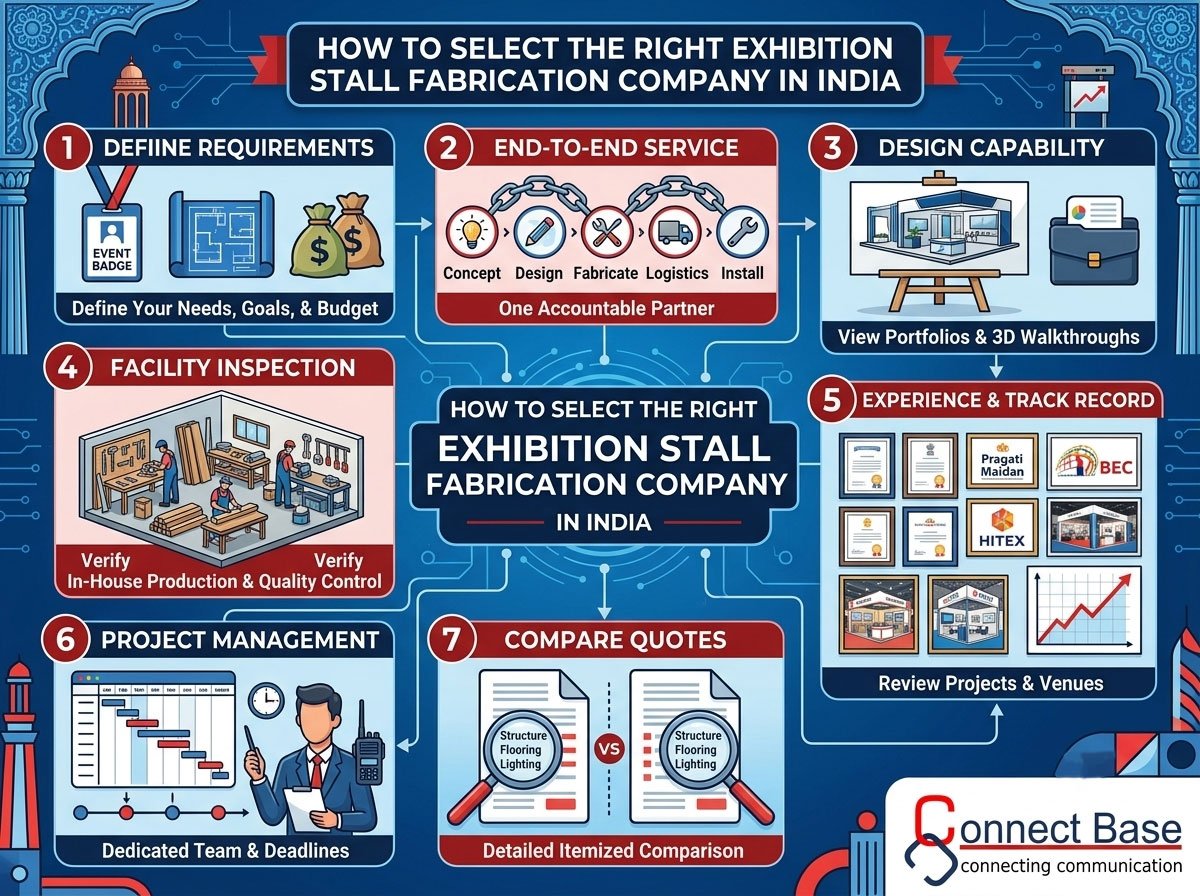
You have paid for the space, booked the flights, and printed the brochures. Now one decision will shape how visitors see your brand for the next three to five days: who builds your stall.
India’s exhibition industry is growing fast. Trade fairs in Delhi, Mumbai, Bengaluru, Hyderabad, Chennai, and Ahmedabad draw thousands of exhibitors each year. With so many events, the market is crowded with fabricators. Some are excellent, and some will leave you with missed deadlines, wobbly structures, and a stall that looks nothing like the 3D render.
This guide walks you through how to choose the right exhibition stall fabrication company in India. It covers what to evaluate, which questions to ask, which red flags to watch for, and how to compare quotes fairly.
A stall is not just a set of walls and a counter. It is your brand’s temporary headquarters, and its quality affects results you can measure:
The company you hire should understand your business goals as well as carpentry and lighting.
Get clear on your own needs first, because vague briefs produce vague quotes. Write down:
With this in hand, you can compare companies properly instead of guessing.
Some vendors only build. Others only design. The smoothest experience comes from a partner that handles the whole chain:
Coordinating separate vendors for design, printing, and installation multiplies the chances of delay and blame-shifting. A single accountable partner cuts that risk. At Connectbase Communications, exhibition stall design and fabrication is handled end to end, from strategy and planning through to the final build.
Good fabrication starts with good design. Ask to see:
The best designers study your market, your competitors’ stall patterns, and your target visitors before drawing anything. It is worth asking whether a company works this way. To see why design details matter, read our post on why it’s important to maintain exhibition stand design aesthetics.
A serious company will show you 3D visuals before you approve anything. This lets you spot layout problems, check sightlines, and confirm branding placement while changes are still cheap. Be cautious of vendors who only give a rough sketch and ask for an advance payment.
This step is the most overlooked. Many companies subcontract everything, and you never learn who actually builds your stall.
Ask directly:
A company with its own production unit controls quality, timelines, and cost better than one passing work to third parties. It can also fix problems quickly when changes come at the last minute, which they always do.
Years in business matter, but the more important measure is what those years produced. Look for:
Connectbase, for example, serves 500+ customers across India, which reflects experience with different venues, industries, and organizer requirements.
Deadlines in exhibitions are absolute. The show opens whether or not your stall is ready. Ask how the company manages delivery:
A vague answer here should worry you. Professional firms plan the build backward from the show’s opening hour. If you are new to this, our guide to planning a successful exhibition shows what a well-run timeline looks like.
Price matters, but the lowest quote is rarely the cheapest outcome. Two quotes for the “same stall” can differ by 30 to 40 percent because of what is quietly left out.
Compare each quote line by line:
| Item | What to check |
|---|---|
| Structure | Material type, thickness, finish |
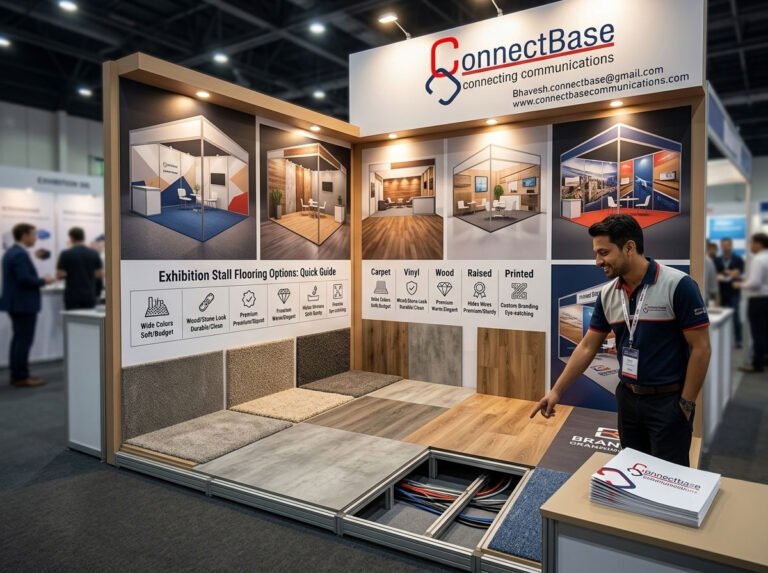
| Flooring | Carpet, raised platform, vinyl |
| Lighting | Number of spotlights, LED profile lights, wattage |
| Graphics | Print quality, material, size |
| Furniture | Rental or purchase, quantity, quality |
| Electrical | Power load, sockets, organizer charges |
| Logistics | Transport, labour, dismantling |
| Taxes | GST included or extra |
Hidden costs to ask about:
Request an itemized quote. If a company won’t break down its pricing, treat that as a warning sign.
Exhibitors increasingly want stalls that can be reused or reconfigured for future shows. This is where modular systems make financial sense: you invest once and adapt the layout for different stall sizes.
Ask potential partners:
Beyond the environmental benefit, reusability can lower your cost per show significantly if you exhibit several times a year.
Your stall will be seen from 10 to 20 metres away in a busy hall. Graphics and color must work from a distance, or visitors will not notice you. A capable company understands contrast, hierarchy, brand consistency, and readability under hall lighting. Read more in our article on the significance of graphics and choice of color in exhibition stand design.
Ask to see printed samples and check whether they handle high-resolution printing in-house or outsource it.
Today’s exhibitions go beyond static booths. Depending on your goals, you may want:
You do not need every gadget, but your fabricator should know what is possible and suggest what suits your budget and audience. Keep an eye on the upcoming trends in the events and exhibition industry to see what is worth investing in.
The way a company treats you before the contract is usually the best it will ever be. Notice:
Good communication also matters at 2 a.m. on the setup day when a last-minute change arrives. Choose a team that stays calm and solves problems.
Before paying anything, make sure the agreement covers:
Post-event support matters too. Ask what happens to your stall structure after the show: storage, reuse, or disposal.
Walk away, or at least dig deeper, if you notice any of these:
Use this checklist during your calls and meetings:
| Option | Pros | Cons |
|---|---|---|
| Professional fabrication company | End-to-end service, accountability, quality control, experience | Higher cost than freelancers |
| Freelance designer + local vendors | Lower cost, flexible | You manage everything, so quality and deadline risk is high |
| Organizer-appointed contractor | Convenient, familiar with the venue | Limited design freedom, often standard packages |
For most businesses, especially those exhibiting regularly, an established fabrication company gives the best balance of cost, quality, and reliability.
Costs vary by city, stall size, materials, and design complexity. As a rough guide, pricing is usually quoted per square metre or per square foot, and it rises with premium finishes, double-decker structures, heavy AV, and custom builds. Rather than chasing a single number, ask for a cost breakdown against your objectives. A moderately priced stall with a strong layout and good lead flow will outperform an expensive one that looks impressive but confuses visitors.
For an accurate figure, request a customized quote with your stall size, show dates, and requirements.
Selecting a partner comes down to trust, and trust comes from transparency. Here is what Connectbase Communications offers exhibitors across India:
Explore our exhibition stall design and exhibition stall fabrication services, browse our portfolio, or see our event planning services if you also need help with the wider exhibition programme.
1. How early should I hire an exhibition stall fabrication company?
Ideally 6 to 8 weeks before the show for a custom stall. Complex builds and popular exhibitions may need more time. Booking early gives you room for design revisions and organizer approvals.
2. Should I choose a custom stall or a modular stall?
Choose custom if you want a unique brand statement for a flagship show. Choose modular if you exhibit often and want to reuse and reconfigure the same system to save money over time.
3. Do fabrication companies handle organizer permissions?
Reputable companies do. They prepare and submit drawings, meet safety and electrical norms, and coordinate with organizers. Always confirm this is included in the scope.
4. What is the difference between a stall designer and a stall fabricator?
A designer creates the concept and visuals. A fabricator builds it. The best results come when one company does both, so the design is actually buildable within your budget and timeline.
5. Can I change the design after approval?
Minor changes are usually possible, but late changes can raise costs or delay delivery. Confirm the revision policy in your contract.
6. How do I know if a company can deliver on time?
Ask for a written timeline, check references from recent clients, and look at how organized their communication is from the start.
Choosing an exhibition stall fabrication company in India is a business decision as much as a creative one. Start with clear goals, shortlist companies that offer end-to-end service, inspect their portfolio and production capability, compare itemized quotes, and confirm timelines and after-sales support in writing.
The right partner will treat your stall as a tool for generating leads and building your brand, not just a structure to install. Take your time, ask the hard questions, and pick a team you trust.
Ready to build a stall that gets noticed? Contact Connectbase Communications at bhavesh.connectbase@gmail.com or visit www.connectbasecommunications.com to share your brief and get a tailored design and quote.
Keep reading
WhatsApp us
 +91 7600576410