Key Takeaways
- Modular and reusable builds, often combined with a few custom feature elements, are replacing single-use stalls.
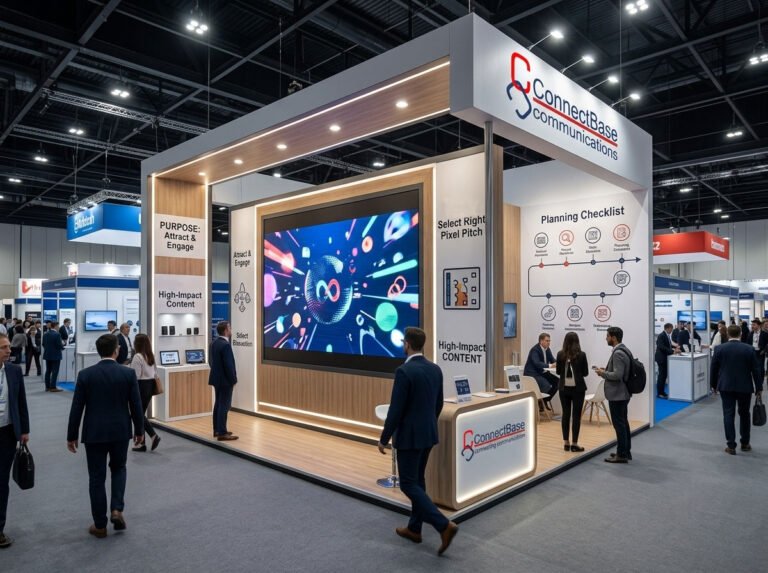
- LED video walls are common on mid-sized and large stalls but need short looping content, good placement and power planning.
- Open layouts with fewer walls, plus meeting zones and seating, reflect how exhibitions in India are used for planned business meetings.
- Natural materials and lighting-led design make a modest build look premium, as long as materials meet fire-safety rules.
- No stall needs every trend; choose the ones that suit your goals, budget and how often you exhibit.
Exhibition stall design changes a little every season, as exhibitors learn what works on the show floor and what simply costs money. This article walks through the stall design trends we expect to see at Indian exhibitions in 2026, from modular and reusable builds and LED video walls to open layouts, meeting zones, natural materials and lighting-led design, with practical notes on when each one makes sense.
Modular and reusable builds
More exhibitors are moving away from stalls that are built for one show and scrapped after dismantling. Instead, they are choosing a reusable core, such as an aluminium frame system with fabric graphics, and adding custom-built elements like a branded reception counter or a feature wall on top.
This hybrid approach suits companies that exhibit several times a year at shows of different sizes. The same components can be reconfigured for a 9 sq m stall at one event and a larger raw-space stall at another, with only the graphics changing. It also cuts down on the waste that one-time MDF builds create, which matters to brands that talk about sustainability in their own marketing. If you are weighing the two approaches, our comparison of custom and modular exhibition stalls sets out the trade-offs.
LED video walls in place of printed backdrops
LED video walls have become a common sight on mid-sized and large stalls. A single screen can show product animations, case videos and launch messages in rotation, and the content can be changed for each show without reprinting anything.
A video wall only works if it is planned properly:
- Content first. Prepare short, looping content that makes sense without sound, because hall noise drowns out audio.
- Placement. Mount the wall high enough to be seen over the crowd and from the main aisle.
- Power. Include the screen in your power load calculation when you apply for electrical connections from the organiser.
- Balance. Keep your brand name and core message on a fixed graphic as well, so it is visible even between video loops.
Interactive elements visitors can use
Interactive features are becoming more practical and less of a novelty. Touchscreen product catalogues, AR views that show the inside of a machine, and simple configurators that suggest a product after a visitor answers a few questions are all being used to give visitors something to do while they talk to staff.
Two smaller trends sit alongside this. QR codes linking to digital catalogues and videos are replacing stacks of printed brochures, which reduces printing and makes follow-up easier. And many stalls now include a small, well-lit photo spot with the brand name, because visitors share these pictures on social media without being asked. For the hardware and planning side, see our guide on using interactive technology on an exhibition stall.
The rule of thumb stays the same: only add technology your team can run reliably for the full show, with a backup plan if the internet or a device fails.
Open layouts with fewer walls
Closed stalls with high walls on every side and a narrow entrance are giving way to open layouts. Exhibitors want visitors to see into the stall from the aisle and walk in without feeling they are entering a room.
- Low counters and display plinths near the open sides instead of a solid front wall.
- Height used for branding, through hanging signs, tall fascia or a single feature wall at the back, rather than walls that block sightlines.
- Clear walking routes so visitors can move around products without bumping into staff or furniture.
Check the organiser’s rules before designing. Most shows set height limits and rules about how much of a side facing an aisle can be closed.
Meeting zones and places to sit
Exhibitions in India are increasingly used for planned business meetings rather than only walk-in enquiries. That has made a dedicated meeting zone a standard request even on medium-sized stalls. The trend is towards semi-open meeting areas, screened with slatted partitions, planters or frosted panels, rather than fully enclosed cabins.
A comfortable seating corner with water and phone charging points also gives tired visitors a reason to stay and talk. Our guide on creating private meeting areas without closing off the stall covers the design options in detail.
Natural materials, textures and planting
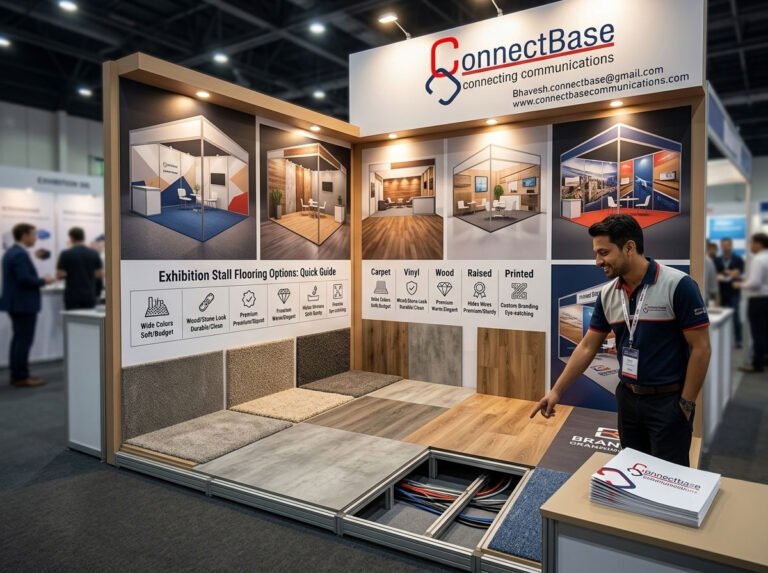
Wood veneers, cane, stone-finish laminates, jute and other natural textures are showing up on stalls across industries, often combined with live or artificial plants. They make a stall feel calmer and warmer than one finished entirely in gloss paint and vinyl, and they suit brands that want to signal sustainability.
A few practical points apply:
- Materials must meet the organiser’s fire-safety requirements, so use fire-retardant boards and treated finishes.
- Live plants need watering and can wilt under hall lights over a multi-day show; good artificial planting is often the more reliable choice.
- Textured surfaces invite people to touch, so use them where visitors are likely to stand and interact.
Some exhibitors go further with a multi-sensory approach, such as a subtle branded fragrance or a soft background soundscape. These can work for wellness, hospitality and lifestyle brands, but keep them gentle so they do not bother neighbouring stalls.
Lighting-led design
Lighting is now treated as part of the design from the first concept, not something added at the end. Backlit fabric graphics, cove lighting along ceilings and counters, focused spotlights on hero products and warm or cool colour temperatures chosen to match the brand all help a stall read clearly against the flat general lighting of an exhibition hall.
Good lighting can make a modest build look finished and premium, which is why it pairs well with the modular trend. Our article on using lighting to make your exhibition stall more attractive explains how to plan it.
Choosing which trends to follow
No stall needs every trend. Start from your goals for the show, your stall size and how often you exhibit, then pick the ideas that serve those goals. A frequent exhibitor may get the most from a reusable modular core with good lighting; a company launching a product may put its budget into a video wall and a demo area; a business that relies on meetings may prioritise a comfortable meeting zone.
Connectbase Communications has been designing and fabricating stalls in Ahmedabad since 2009, and our exhibition stall design team can help you decide which of these ideas fit your brief and budget. To discuss your next stall, contact us or call +91 7600576410.