
Exhibition Stall Design & Fabrication
Search “exhibition stall design company in India” and you’ll get hundreds of results — from large national fabricators to small local vendors who moonlight as designers between other jobs. Somewhere in that list is a company that will design and build a stall you’re genuinely proud of. And somewhere in that same list is a company that will miss deadlines, cut corners on materials, and leave you troubleshooting a wobbly structure an hour before doors open.
The problem is, from the outside, both companies often look identical — polished portfolio, confident sales pitch, competitive quote. So how do you actually tell them apart before signing a contract?
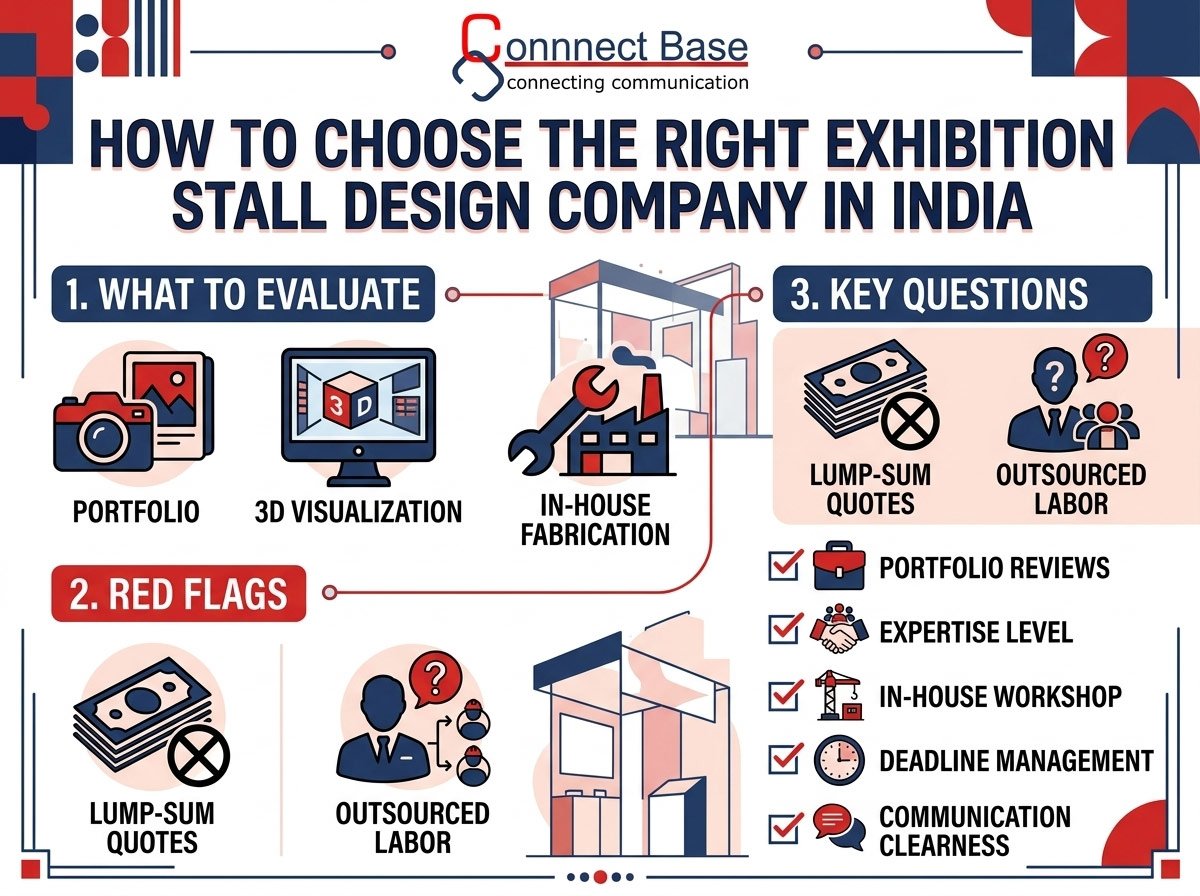
This guide walks through exactly what to evaluate when choosing an exhibition stall design company in India, the red flags that should make you pause, and the questions that separate a genuine fabrication partner from a vendor who’s just filling capacity.
An exhibition stall isn’t just a physical structure — it’s a live representation of your brand in front of your industry, your competitors, and your prospects, for the few days that matter most in your annual marketing calendar. Unlike a website or a brochure, there’s no “quick fix” if something goes wrong on-site. A panel that doesn’t align, a structure that arrives late, or a design that looks nothing like the render you approved — these problems play out in real time, in front of the people you most want to impress.
Choosing the right design company isn’t about finding the cheapest quote. It’s about finding a partner who understands your goals, delivers what they promise, and shows up reliably when it counts.
Almost every exhibition stall company will show you a portfolio of glossy, well-lit stall photos. That’s the easy part. What matters more is whether their experience aligns with what you actually need:
A company with a broad portfolio but no depth in your specific requirements may still do a fine job — but ask more questions before assuming so.
The quality of the final stall is a direct result of the process used to get there. When evaluating a company, ask specifically:
A company that skips the briefing and visualization stages is more likely to produce a stall that diverges from what you actually pictured — because there was never a clear checkpoint to catch misalignment early.
Many exhibition stall “companies” in India are primarily project coordinators — they design the concept, then outsource carpentry, printing, electrical work, and installation to third-party vendors. This isn’t inherently a problem, but it does affect quality control, accountability, and timelines.
Ask directly:
Companies with in-house fabrication and installation teams generally offer tighter quality control and faster problem resolution, since there’s no middleman to coordinate with under time pressure.
One of the clearest signals of a trustworthy exhibition stall company is how they price their work. A vague, lump-sum quote (“₹6,00,000 for the full stall”) makes it difficult to know what you’re actually paying for — and makes it easy for costs to creep up later through undisclosed add-ons.
A transparent quotation should break down costs by:
If a company is reluctant to itemize their quote, or the numbers change significantly once you ask for a breakdown, treat that as a warning sign.
Portfolio photos show you the finished product; references tell you about the experience of getting there. Before committing, ask for:
A company confident in their work will have no hesitation connecting you with past clients. Reluctance here is worth noting.
How a company communicates before you’ve signed a contract is often a preview of how they’ll communicate once you’re mid-project and something urgent comes up.
Pay attention to:
A company that over-promises during the sales conversation — agreeing to unrealistic timelines or budgets just to win the project — often struggles to deliver once reality sets in.
Design and fabrication are only half the job. On-site installation is where problems most commonly surface — a delayed shipment, a venue access issue, a last-minute design tweak from you. Ask:
Companies with a structured, documented installation process (rather than an informal “we’ll figure it out on the day” approach) are far more likely to deliver a stress-free build-up.
It’s natural to compare quotes across 3–4 companies, and you should. But be cautious of quotes that come in significantly lower than the rest — this often reflects cut corners in material quality, insufficient labor allocation, or hidden costs that surface later.
A useful approach: get itemized quotes from at least three companies, compare them line by line (not just the bottom-line total), and ask each company to explain any significant discrepancies in specific line items. This reveals far more about value than comparing total numbers alone.
If a company shows two or more of these red flags, it’s worth pausing before signing, regardless of how attractive the quote looks.
Use this as a quick checklist during your final evaluation call:
A company that answers these clearly and confidently — without hedging or vague reassurances — is far more likely to be a reliable long-term partner for your exhibition needs.
At Connectbase Communications, we work with exhibitors across India who want more than just a stall built to spec — they want a partner who understands their brand, communicates clearly throughout the process, and delivers exactly what was promised, on time. Our process includes a structured briefing, photorealistic 3D visualization before fabrication, transparent itemized quotations, and dedicated on-site project management from build-up through dismantling.
If you’re evaluating exhibition stall design companies for an upcoming show and want a partner who treats your stall as seriously as you do, we’d welcome the conversation.
📩 Email: bhavesh.connectbase@gmail.com 🌐 Website: www.connectbasecommunications.com
Choosing the right exhibition stall design company in India comes down to looking past the glossy portfolio and asking the questions that actually predict how the project will go — their process, their transparency, their in-house capabilities, and their track record with real clients. The cheapest quote rarely turns out to be the best value once you factor in delays, revisions, and on-site surprises. Take the time to evaluate properly, and your stall — and your stress levels during build-up week — will be better for it.
1. What should I look for first when shortlisting exhibition stall companies in India? Start with relevant experience — check whether they’ve handled your stall size, industry, and venue before, and ask for real installation photos rather than just polished renders.
2. Is it better to choose a company with in-house fabrication? Generally, yes. In-house fabrication and installation teams offer tighter quality control and faster problem resolution compared to companies that outsource production to third-party vendors.
3. Should I always choose the lowest quote? No. Significantly lower quotes often reflect cut corners in materials, labor, or hidden costs that surface later. Compare itemized quotes line by line rather than just the total figure.
4. How many exhibition stall companies should I get quotes from? Getting quotes from 3 to 4 companies is generally enough to compare pricing, process, and communication style without dragging out your decision timeline.
5. What’s the most important question to ask before signing a contract? Ask for references from recent clients and actually speak with them — this reveals more about reliability and delivery quality than any portfolio or sales pitch.
Planning a stall for an upcoming show? Contact Connectbase Communications or call +91 7600576410 to talk through your requirements.
Keep reading
WhatsApp us
 +91 7600576410