Introduction
Every industry has different products, customers, business objectives and exhibition requirements. A pharmaceutical company attending a healthcare exhibition needs a professional environment for discussing medicines, technology and manufacturing capabilities. An engineering company may need heavy machinery displays, live demonstrations and technical meeting areas. A jewellery brand requires premium showcases, controlled lighting and secure product displays.
This is why one exhibition stall design cannot work equally well for every business.
A successful exhibition stall should be designed around the products being displayed, the visitors the company wants to attract, and the business conversations that need to happen during the event. The right combination of layout, lighting, branding, product presentation and visitor experience can transform a simple exhibition space into a powerful marketing and sales environment.
At Connectbase Communications, we design and fabricate exhibition stalls for businesses participating in exhibitions across India. Whether a company is exhibiting at a manufacturing expo, pharmaceutical trade show, food exhibition, jewellery event or electronics exhibition, the design approach should be adapted to its industry and objectives.
In this guide, we explain how to plan exhibition stall designs for different industries and what exhibitors should consider before investing in a custom exhibition booth.
Why Exhibition Stall Design Should Be Industry-Specific
Exhibition visitors attend trade shows with different expectations. A machinery buyer wants to inspect equipment, understand technical specifications and speak with product specialists. A jewellery buyer wants to examine collections, finishes and quality. A pharmaceutical distributor may want to discuss product portfolios, certifications, manufacturing capabilities and business partnerships.
A generic stall design may look attractive but fail to support these important interactions.
Industry-specific exhibition stall design considers:
- The type, size and quantity of products being displayed
- The target audience and their buying behaviour
- The purpose of exhibiting, such as lead generation, product launches or distributor development
- The amount of space required for product demonstrations
- The type of meetings and discussions that will take place
- Industry-specific branding and visual expectations
- Storage, safety and technical requirements
When these factors are considered during the design process, the exhibition stall becomes more than a backdrop. It becomes a functional environment that supports the exhibitor’s marketing and sales objectives.
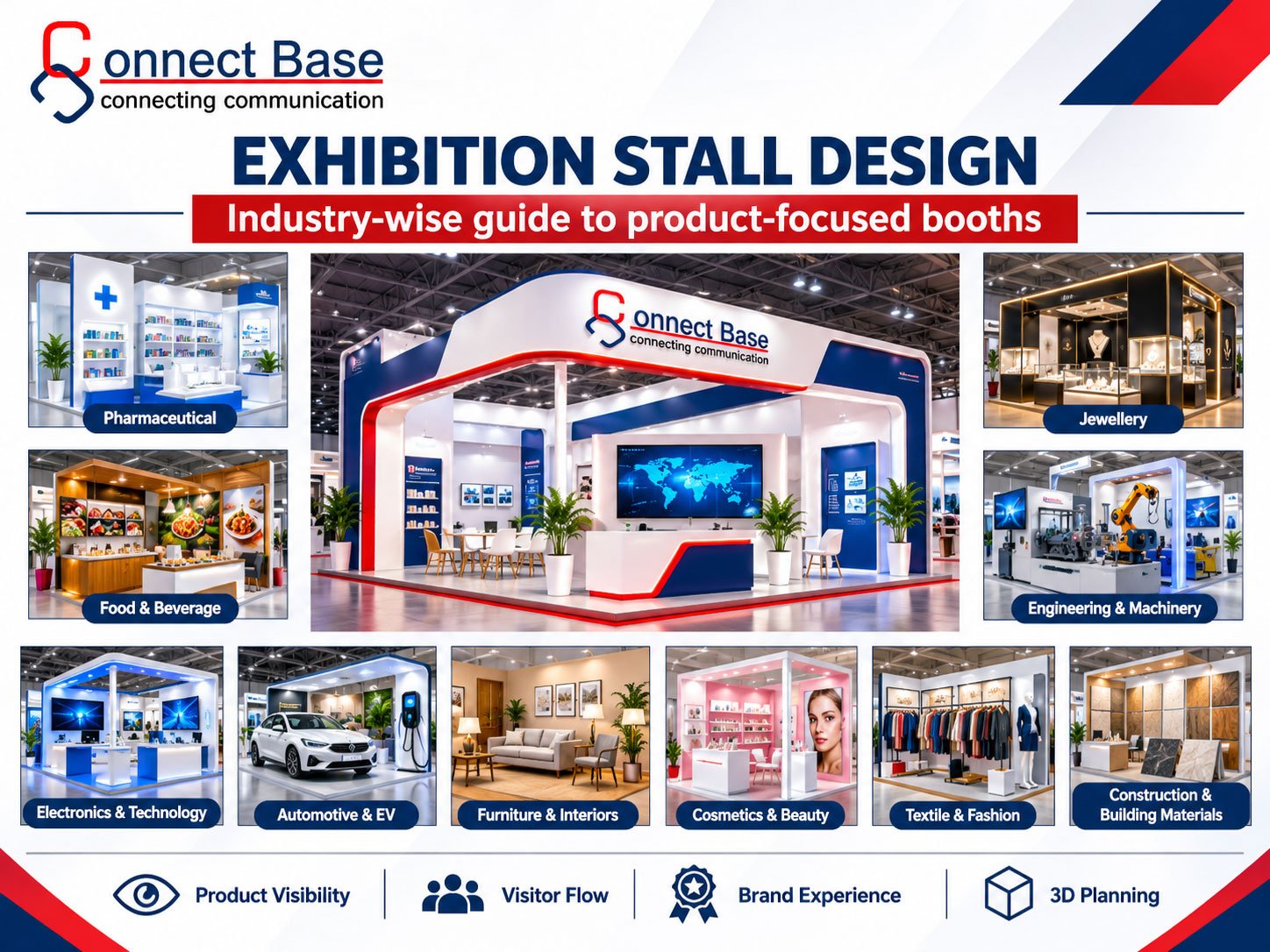
1. Exhibition Stall Design for the Pharmaceutical Industry
Pharmaceutical exhibitions bring together manufacturers, distributors, healthcare professionals, packaging companies, research organisations and business partners. Pharma companies often need to communicate a large amount of information while maintaining a clean, professional and trustworthy brand image.
Key design requirements
A pharmaceutical exhibition stall should communicate reliability, innovation, quality and professionalism. White, blue, green and other clean colour combinations are commonly used, although the final palette should follow the brand’s identity.
Important design elements include:
- Clear product-category displays
- Professional branding and company messaging
- Backlit panels for product information
- Dedicated meeting tables for business discussions
- Storage for brochures, catalogues and promotional materials
- Screens for company presentations and product videos
- Well-organised product display shelves
For pharmaceutical companies, readability is especially important. Visitors should be able to identify the company’s products, therapeutic categories, manufacturing capabilities or business services without searching through crowded graphics.
Recommended stall layout
A pharma stall can be divided into three main zones: a welcome and branding area, product-information displays, and a meeting area. The welcome zone should attract visitors from the aisle, while the product area should allow them to explore the portfolio. The meeting zone can support longer discussions with distributors, buyers and business partners.
A well-planned pharmaceutical exhibition stall helps the sales team communicate efficiently and maintain a professional brand experience.
2. Exhibition Stall Design for the Food and Beverage Industry
Food exhibitions are highly visual. Visitors may be looking for new products, ingredients, machinery, packaging solutions, suppliers or distribution opportunities.
The stall design should make products easy to discover and, wherever permitted, easy to experience.
Key design requirements
Food and beverage exhibitors should consider:
- Attractive product shelves and display counters
- Sampling counters with easy visitor access
- Clear product categories and brand messaging
- Refrigerated or temperature-controlled displays where required
- Hygienic presentation areas
- Storage for samples, packaging and supplies
- Digital screens showing manufacturing or product information
For brands exhibiting packaged foods, snacks, beverages, spices or ingredients, product colours and packaging should remain visible. Large graphics can create brand recognition, but they should not compete with the products themselves.
Creating an effective visitor experience
Sampling can encourage visitors to stop and interact, but the stall should be planned so sampling activities do not block entrances or walkways. A dedicated sampling counter can help staff manage visitors while keeping the product display area organised.
For food machinery companies, the approach is different. The stall may need equipment displays, demonstration counters, technical specifications and space for engineers to explain how machines work.
The design should reflect whether the exhibitor is selling food products, food processing machinery, packaging technology or ingredients.
3. Exhibition Stall Design for the Jewellery Industry
Jewellery exhibitions require a strong focus on premium presentation, lighting, security and visitor comfort. Jewellery products are small, detailed and highly dependent on how they are displayed.
A poorly lit showcase can make even a premium collection appear ordinary, while carefully planned lighting and display arrangements can enhance the perceived quality of the products.
Key design requirements
Jewellery exhibition stalls should include:
- Secure glass display counters
- Lockable showcases
- Focused display lighting
- Premium materials and finishes
- Elegant branding and colour combinations
- Private viewing or discussion areas
- Secure storage and staff-controlled access
Lighting should be selected according to the type of jewellery being displayed. Gold, diamonds, gemstones and fashion jewellery may require different lighting approaches to highlight their colour, shine and details.
Layout and visitor flow
Jewellery stalls should allow buyers to comfortably approach showcases without crowding. A combination of open display counters and private viewing areas can support different types of customers.
For high-value collections, a semi-private meeting space can help the sales team conduct detailed discussions while maintaining a premium atmosphere.
The design should balance visibility and security. Displays should attract attention from the aisle, while the internal arrangement should provide controlled access to products.
4. Exhibition Stall Design for Engineering and Machinery Companies
Engineering and industrial exhibitions often involve large, heavy, complex or technical products. The stall design must accommodate machinery, components, product models, technical displays and demonstrations.
Unlike stalls designed mainly for branding, industrial stalls need to communicate technical capability and product performance.
Key design requirements
Engineering exhibitors should plan for:
- Machinery and equipment placement
- Heavy-product load requirements
- Clear technical product displays
- Live demonstration areas
- Electrical connections and power requirements
- Safety clearances and visitor access
- Product specifications and application graphics
- Space for engineers and sales representatives
The placement of machinery should be planned carefully. Visitors need enough room to view equipment from different angles, while staff need safe access for demonstrations and technical explanations. Heavy displays also need strong, well-built structures, which is where good exhibition stall fabrication makes a real difference.
Make the product the centre of attention
For industrial exhibitors, the machinery itself is often the strongest attraction. The stall should use its structure and graphics to guide attention towards the equipment rather than overpowering it with decorative elements.
Product-specific graphics can explain applications, performance benefits, manufacturing capabilities and technical advantages.
A large machine may require a wider open layout, while smaller engineering products can be displayed using counters, shelves, wall-mounted showcases or demonstration stations.
5. Exhibition Stall Design for Electronics and Technology Companies
Electronics and technology exhibitions are competitive environments where visitors expect innovation, modern displays and opportunities to interact with products.
A technology exhibition stall should help visitors understand what the product does and why it is useful.
Key design requirements
Technology exhibitors can incorporate:
- Interactive product demonstration stations
- LED screens and digital displays
- Touchscreens and product configurators
- Charging stations
- Product shelves and demonstration counters
- Cable management and concealed electrical infrastructure
- Dedicated presentation or meeting areas
Digital screens can help explain complex products through animations, videos and product demonstrations. However, technology should support the product rather than become decoration.
Interactive product demonstrations
Interactive experiences can be particularly effective for electronics, software, smart devices and technology solutions. Visitors may be able to test a product, explore its features or watch a demonstration.
Each interactive station should have enough space for visitors to participate without blocking the main circulation area.
A good technology stall combines visual impact with usability. Visitors should immediately understand where to go, what they can try and how to engage with the brand.
6. Exhibition Stall Design for Automotive and Electric Vehicle Companies
Automotive and electric vehicle exhibitions require stalls that showcase products, technology, design and innovation. Depending on the exhibitor, the display may include vehicles, motors, batteries, components, charging equipment or accessories.
Key design requirements
Automotive exhibitors should plan for:
- Vehicle or product display platforms
- Strong visual branding
- Open sightlines from the exhibition aisle
- Technical information panels
- Product demonstration areas
- Meeting spaces for buyers and dealers
- Appropriate safety and movement clearances
Vehicle displays need sufficient space for visitors to view the vehicle and, where permitted, interact with it. The design should also allow staff to manage visitor movement around the product.
For EV technology companies, the stall can highlight charging systems, battery technology, motors, components and digital solutions through dedicated display zones.
A well-designed automotive exhibition stall should make the primary product visible from a distance while providing enough space for meaningful technical and business discussions.
7. Exhibition Stall Design for Furniture and Interior Design Companies
Furniture and interior exhibitions are different because visitors need to experience the products physically. Seating, tables, lighting, materials and room arrangements can communicate quality more effectively than product photographs.
Key design requirements
Furniture and interior exhibitors should consider:
- Realistic room-style arrangements
- Comfortable seating areas
- Material and finish samples
- Decorative lighting
- Product demonstration zones
- Storage for catalogues and samples
- Clear pathways between furniture displays
Rather than placing every product in a crowded arrangement, the stall can create small lifestyle settings. For example, a furniture brand may create a living-room display, a workspace arrangement or a premium dining environment.
These zones help visitors imagine how products could be used in their own homes, offices or commercial projects.
The design should also allow visitors to move comfortably around furniture and test products where appropriate.
8. Exhibition Stall Design for Cosmetics and Beauty Brands
Beauty and cosmetics exhibitions depend heavily on visual presentation, product discovery and brand experience. Visitors may be interested in skincare, makeup, haircare, salon products, beauty equipment or professional services.
Key design requirements
Beauty exhibitors can include:
- Product display shelves
- Illuminated branding
- Demonstration counters
- Mirror and trial areas
- Consultation seating
- Product category displays
- Attractive packaging presentation
The stall’s colour palette and material finishes should match the brand’s positioning. A premium skincare brand may prefer a minimalist design, while a colourful cosmetics brand may use bold colours and creative display structures.
Demonstration areas are useful for products that visitors can test or experience. However, the layout should separate demonstration activities from the main product displays to avoid congestion.
9. Exhibition Stall Design for Textile and Fashion Companies
Textile, garment and fashion exhibitions require display systems that showcase colours, patterns, textures and collections.
The design should allow buyers to inspect materials and compare products easily.
Key design requirements
Textile and fashion exhibitors may need:
- Fabric racks and hanging display systems
- Product sample walls
- Collection-wise display zones
- Tables for material inspection
- Storage for samples
- Fashion presentation areas
- Meeting spaces for buyers
Lighting should accurately represent product colours as much as possible. Display systems should allow visitors to examine fabric samples without creating a cluttered appearance.
For garment companies, mannequins and coordinated product displays can communicate collection themes. For textile manufacturers, sample books and fabric panels can help buyers compare materials, patterns and finishes.
10. Exhibition Stall Design for Construction and Building Materials
Construction and building-material exhibitions feature products such as tiles, sanitaryware, paints, architectural materials, hardware, doors, flooring, lighting and building technology.
Many of these products need to be seen in realistic settings rather than displayed as small samples.
Key design requirements
A construction-material stall may include:
- Large material sample displays
- Wall-mounted product systems
- Tile and flooring display panels
- Lighting demonstrations
- Product comparison areas
- Storage for samples
- Technical information displays
Where possible, products should be displayed in small application-based settings. A tile company, for example, may create a sample wall or floor section that demonstrates how the material looks in an actual environment.
The design should provide easy access to samples while ensuring that the structure can safely support the weight of the products.
11. How to Choose the Right Exhibition Stall Design for Your Industry
Before starting the design process, exhibitors should answer a few important questions.
Define your exhibition objective
Are you participating to generate leads, launch products, meet distributors, demonstrate technology, strengthen brand awareness or meet existing customers?
Your objective should determine the stall’s layout and functionality.
Identify the products that need priority
Not every product needs to be displayed. Identify your most important products and allocate the most visible locations to them.
Understand your visitors
Consider who will visit your stall: distributors, retailers, engineers, architects, procurement managers, business owners or end customers.
The design should make it easy for these visitors to understand your offering and interact with your team.
Plan the space properly
Confirm stall dimensions, open sides, height restrictions, entrances, product requirements, storage and meeting areas before designing the structure.
Select suitable materials and finishes
Materials should reflect the brand while meeting practical requirements such as durability, product weight, installation time and budget.
Plan the design before fabrication
Review the complete design, including product placement, branding, lighting, electrical requirements and visitor flow, before fabrication begins.
A detailed design review helps reduce misunderstandings and avoid expensive last-minute changes.
12. Why 3D Exhibition Stall Design Is Important
3D exhibition stall design allows exhibitors to visualise their booth before fabrication. Instead of relying only on floor plans or written descriptions, businesses can review realistic views of the proposed stall.
A 3D design helps evaluate:
- Product placement and display visibility
- Branding and logo positioning
- Visitor movement and entry points
- Lighting and material finishes
- Meeting areas and furniture
- Structure, height and overall appearance
For industry-specific stalls, 3D visualisation is particularly useful because products often have unique display requirements.
Machinery exhibitors can review equipment positioning. Jewellery brands can examine showcase placement. Food companies can check sampling-counter arrangements. Technology companies can evaluate demo stations and screens.
Making these decisions during the design stage can improve coordination between the exhibitor, designer and fabrication team.
13. Choosing an Exhibition Stall Design and Fabrication Partner
Selecting the right exhibition stall design company is an important part of exhibition planning. A good partner should understand the exhibitor’s industry, products, event objectives, space requirements and execution timeline.
When comparing stall design companies, consider:
- Experience with your industry
- Quality of previous exhibition projects
- 3D design and visualisation capabilities
- Fabrication quality and materials
- In-house production capabilities
- Installation and dismantling support
- Communication and project coordination
- Ability to execute across exhibition cities
Working with one team for design, fabrication and execution can make project coordination easier. It can also help ensure that the approved design is translated into the final stall accurately.
Conclusion
Exhibition stall design should never be treated as a one-size-fits-all solution. Every industry has different products, visitor expectations, display requirements and business goals. A pharmaceutical stall needs a professional and informative environment, a jewellery stall requires premium displays and security, a machinery stall needs practical product space, and a technology stall should encourage interaction and demonstrations.
The most effective exhibition stalls combine attractive branding with functional design. They make products easy to see, messages easy to understand and conversations easy to start.
At Connectbase Communications, we provide exhibition stall design, 3D visualisation, fabrication and execution solutions for businesses exhibiting across India. Our team works with exhibitors to create stalls that reflect their brand, showcase their products and support their exhibition objectives.
If you are planning your next exhibition, start with your products, audience and goals. With the right design strategy and execution partner, your exhibition stall can become a valuable business and marketing asset.
Planning your next exhibition? Contact Connectbase Communications to discuss your stall design, 3D visualisation and fabrication requirements.