
October 9, 2026
Connectbase Communications
When visitors walk into an exhibition hall, they notice lighting, graphics and height first. Flooring is rarely on that list. Yet the floor is the largest surface in your stall. It sets the colour mood, affects how comfortable your team and visitors feel, and quietly signals whether your brand is premium, practical or budget-conscious.
Choosing exhibition stall flooring is not only a decoration decision. It touches your budget, installation time, safety, wiring, branding and even how long visitors are willing to stay. This guide walks through the most common flooring options, their pros and cons, and how to decide which one suits your next show.
Why Exhibition Stall Flooring Matters More Than You Think
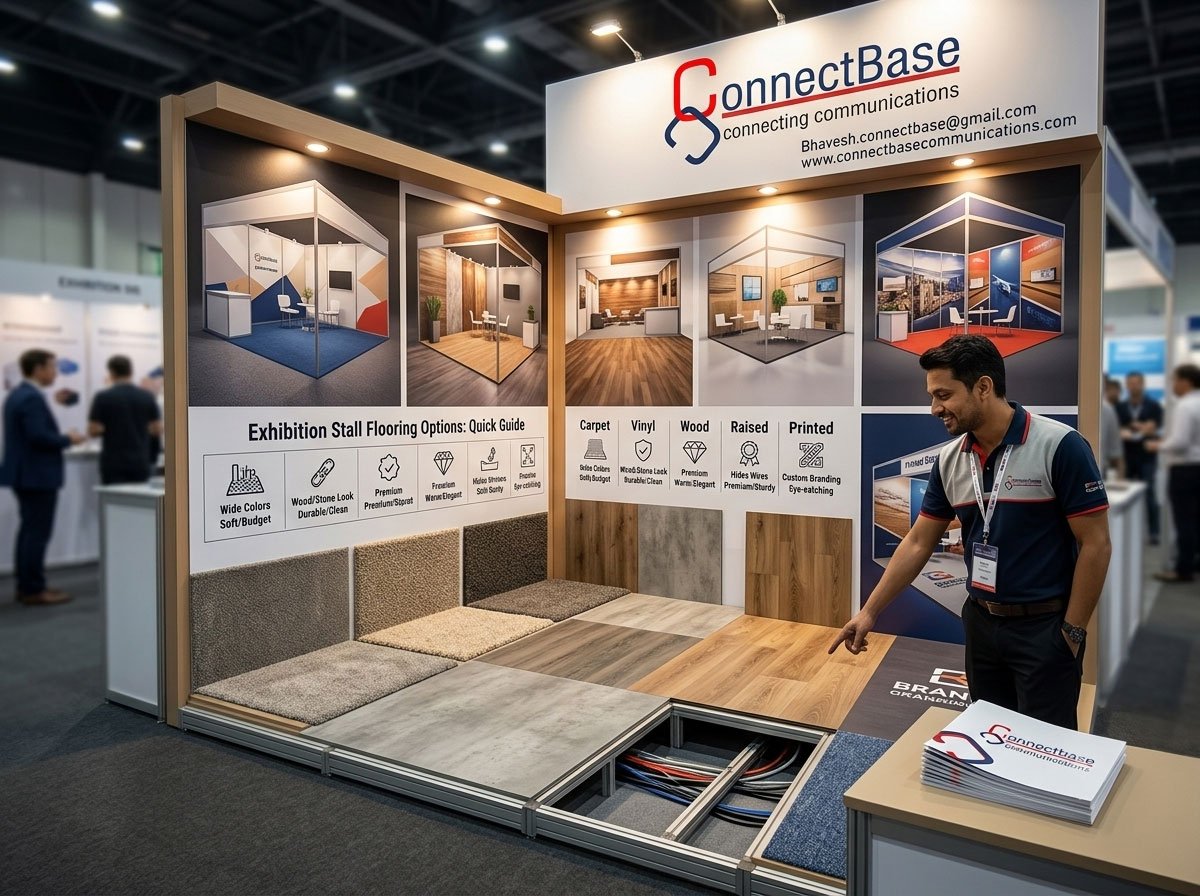
Most exhibition halls have bare concrete or basic hall flooring. Without a proper floor treatment, your stall looks unfinished and blends into the aisle. A well-chosen floor does several jobs at once:
- Defines your space. Flooring creates a clear boundary between your stall and the walkway, which invites visitors in.
- Supports your brand. Colours, textures and patterns can echo your logo and graphics.
- Improves comfort. Exhibitors and staff stand for 8 to 10 hours a day. A cushioned or raised floor reduces fatigue.
- Hides wires and fittings. Raised flooring and carpets help conceal electrical cables and lighting connections.
- Adds a premium look. Even a simple design feels more finished with the right floor.
If you are still shaping your overall concept, our Exhibition Stall Designing service treats flooring as part of the full design, not an afterthought.
The Main Exhibition Stall Flooring Options
1. Carpet Flooring
Carpet is the most common choice for exhibition stands in India, and for good reason.
Advantages
- Wide range of colours, so it is easy to match your brand palette
- Soft underfoot, which is comfortable for long show hours
- Absorbs sound and makes the stall feel calmer
- Cost-effective, especially for larger stalls
- Quick to lay and remove
Disadvantages
- Shows stains and dirt quickly in high-footfall shows
- Can look flat or ordinary if used without other flooring elements
- Needs careful removal and disposal after the event
Best for: Standard shell-scheme upgrades, budget-friendly stalls, short events and shows with heavy visitor traffic.
Pro tip: Pick a medium-to-dark shade or a subtle pattern. Very light carpets look great on day one and tired by day three.
2. Vinyl Flooring
Vinyl has become popular because it offers a polished, modern finish without the cost of real wood.
Advantages
- Available in wood-look, stone-look, marble-look and solid colours
- Easy to clean, so it holds up well through a multi-day exhibition
- Water and stain resistant
- Gives a more premium finish than basic carpet
Disadvantages
- Costs more than standard carpet
- Needs a flat, clean base for a smooth finish
- Can feel harder underfoot for staff
Best for: Product display zones, tech and lifestyle brands, and stalls that want a clean, contemporary look.
3. Wooden or Laminate Flooring
Real or laminate wood flooring creates a warm, high-end feel that works especially well for hospitality, furniture, real estate and luxury brands.
Advantages
- Strong premium impression
- Durable and easy to maintain
- Pairs well with warm lighting and natural material finishes
- Works with raised platforms for a layered look
Disadvantages
- Higher cost than carpet or vinyl
- Heavier to transport and install
- Can get scratched if heavy equipment is moved across it
Best for: Double-storey stalls, lounge-style booths, large custom stalls and brands wanting a boutique feel.
4. Raised Flooring (Platform Flooring)
Raised flooring is a platform built a few inches above the hall floor and finished with carpet, vinyl or wood on top.
Advantages
- Hides electrical wiring, lighting cables and connections neatly
- Makes the stall look distinct from neighbouring booths
- Allows built-in lighting along the edges for a floating effect
- Adds structure to custom-built stalls
Disadvantages
- Increases overall cost and installation time
- Needs a ramp or step for accessibility
- Must be built carefully to stay stable and safe
Best for: Custom-built and fabricated stalls, premium launches, and any design that needs hidden wiring and a clean finish. This is where strong Exhibition Stall Fabrication matters, because a poorly built platform can feel uneven or unsafe.
5. Tile and Stone-Look Flooring
Tiles, or printed tile-effect sheets, give a sleek, almost showroom-like appearance.
Advantages
- Very clean, modern look
- Strong fit for construction, ceramics, interiors and real estate brands
- Easy to wipe down
Disadvantages
- Can look cold if not balanced with warm lighting
- Heavier to move and install than other options
- Higher cost for real tile
Best for: Brands that want to showcase their own flooring or surface products, and showroom-style stalls.
6. Printed or Branded Flooring
Some brands go a step further and print their logo, pattern or message directly onto the floor covering.
Advantages
- Turns the floor into a branding surface
- Highly memorable when done well
- Guides visitors toward key zones or the entrance
Disadvantages
- Printed surfaces can wear down in high-traffic areas
- Needs good design planning so graphics are not distorted
- Slightly higher cost
Best for: Product launches, brand activations and stalls using bold, graphic-led design. Pair this with a clear visual strategy. Our guide on how to design exhibition stall graphics that visitors can understand quickly explains how to keep graphics readable.
7. Rubber and Anti-Fatigue Mats
These are often used behind demo counters, reception desks or areas where staff stand for long periods.
Advantages
- Excellent comfort for standing staff
- Slip resistant
- Easy to place and replace
Disadvantages
- Not usually attractive enough to be the main floor
- Best used as a supporting layer
Best for: Demo counters, live product demonstrations and food or beverage stalls.
Quick Comparison Table
| Flooring Type | Look | Comfort | Cost | Maintenance | Best Use |
|---|---|---|---|---|---|
| Carpet | Basic to stylish | High | Low | Medium | Budget and short shows |
| Vinyl | Modern, polished | Medium | Medium | Low | Product display stalls |
| Wooden / Laminate | Premium, warm | Medium | High | Low | Luxury and lounge stalls |
| Raised Platform | Distinct, layered | Depends on top layer | High | Medium | Custom fabricated stalls |
| Tile / Stone-look | Sleek, showroom | Low | Medium to high | Low | Interiors and real estate |
| Printed Flooring | Bold, branded | Medium | Medium to high | Medium | Launches and activations |
| Rubber Mats | Functional | Very high | Low | Low | Demo and standing zones |
How to Choose the Right Flooring for Your Exhibition Stall
There is no single best option. The right choice depends on a handful of practical factors.
1. Start with Your Budget
Flooring can quietly consume a large share of your stall budget if it is not planned early. Decide a realistic range first, then pick the best material inside it. Carpet gives the best value, vinyl is a strong middle option, and wood or raised platforms sit at the premium end. A good designer will tell you where spending adds value and where it does not.
2. Match the Flooring to Your Brand
Your flooring should feel like part of your brand, not a separate decision.
- A tech brand may suit clean grey, white or wood-look vinyl.
- A luxury or hospitality brand may prefer warm wood tones.
- A manufacturing or engineering brand may work well with bold, durable, darker carpet.
- A lifestyle brand might use colour or printed patterns to stand out.
3. Think About Visitor Footfall
If you expect a heavy crowd, avoid very light carpets that show every mark. Choose darker tones or materials that are easier to clean. For quieter, appointment-driven shows, you have more freedom to choose delicate finishes.
4. Consider Your Stall Size and Type
Small stalls usually do best with a single, simple floor material. Large or island stalls can mix materials, such as wood in the lounge area and carpet in the meeting zone. Mixing adds depth but needs good planning. If you are working with a 3D concept, check how the floor looks in the render. Our post on 3D exhibition stall design: what clients should check before approval shows exactly what to review before you sign off.
5. Plan for Wiring and Lighting
If your stall uses spotlights, LED screens, interactive displays or a lot of electrical fittings, raised flooring or properly managed carpet layering is worth considering. Cables running across a bare floor look messy and can be a tripping hazard.
6. Check Installation Time and Venue Rules
Every exhibition venue has rules about floor loading, adhesives, fire safety and set-up time. Some materials need longer installation windows. Always confirm timelines with your fabricator and the organiser. The questions in our guide on what to ask an exhibition stall fabricator before signing a contract can help you avoid surprises.
7. Don’t Forget Safety and Accessibility
Flooring must be stable, non-slip and free of loose edges. If you use a raised platform, include a gentle ramp or well-finished edge so every visitor, including those with mobility needs, can enter comfortably.
Common Flooring Mistakes Exhibitors Make
Avoiding these will save money and stress:
- Choosing flooring last. When flooring is decided at the end, budgets run out and the result looks like an afterthought.
- Ignoring colour harmony. A bright floor can clash with graphics and lighting. Test the combination in a 3D view first.
- Using thin, low-quality carpet. It wrinkles, shows seams and makes a good design look cheap.
- Poor edge finishing. Rough edges and visible joins ruin an otherwise clean stall.
- Forgetting about wear. A floor that looks fine in a render may not survive four days of heavy traffic.
- Skipping the underlay. A proper base layer improves comfort, hides uneven surfaces and extends carpet life.
Flooring Trends in Exhibition Design
Exhibition design keeps evolving, and flooring is no exception. These are some directions worth knowing about:
- Wood-look vinyl for the warmth of timber at a lower cost
- Two-tone and zoned flooring to separate display, meeting and lounge areas
- LED-lit raised platforms for a modern, glowing perimeter
- Eco-conscious materials such as reusable and recyclable flooring
- Bold geometric patterns that guide visitors through the space
If your stall includes screens or immersive features, flooring should support the experience rather than compete with it. Our article on how interactive technology can transform an exhibition stall covers how to balance technology with the physical design.
Matching Flooring to Your Surface Finishes
Flooring should work with, not against, your wall panels, counters and fixtures. A matte floor beside high-gloss walls can look balanced, while two glossy surfaces can create glare under show lighting. For help with this, read our guide on how to choose the right surface finish for an exhibition stall.
Working With the Right Exhibition Stall Partner
The best flooring choice comes from understanding your brand, budget and show conditions together. A good stall partner will:
- Ask about your goals, audience and show before suggesting materials
- Show you 3D visuals so you can see the floor in context
- Handle fabrication and installation so details like joins and edges are clean
- Coordinate with the organiser on venue rules and timelines
- Keep your design consistent across layout, lighting, graphics and flooring
At Connectbase Communication, we handle the full journey, from concept to build. If you want to see how your stall will look before it is built, explore our Exhibition 3D Stall Designing service. When you are ready to build, our team handles exhibition stall fabrication with careful attention to finishing. And if you are still comparing partners, our guide on how to choose an exhibition stall design company in Ahmedabad offers a clear checklist.
A Simple Flooring Decision Guide
If you are still unsure, use this quick rule of thumb:
- Tight budget, short show: Go for good-quality carpet in a darker shade.
- Modern, easy-to-clean look: Choose vinyl, ideally a wood or stone-look finish.
- Premium, lounge-style stall: Use wooden or laminate flooring, possibly on a raised platform.
- Lots of wiring and lighting: Add a raised platform with a finished top layer.
- Brand-led activation: Consider printed or branded flooring in key zones.
- Staff standing for long hours: Add anti-fatigue mats behind counters.
Final Thoughts
Exhibition stall flooring is one of those details visitors may not consciously notice, but they certainly feel it. The right floor makes your stall look complete, supports your brand and keeps your team comfortable through a long show. The wrong one can make a well-designed stall look unfinished.
Start thinking about flooring at the design stage, balance your budget with the impression you want to create, and always check how it works with your lighting, graphics and fabrication details.
Planning an exhibition stall and need help choosing the right flooring? Connectbase Communication can help you design, visualise and build a stall that works from the floor up.
📧 Email: bhavesh.connectbase@gmail.com
🌐 Website: www.connectbasecommunications.com
FAQs
1. Which flooring is best for an exhibition stall?
There is no single best option. Carpet suits tight budgets, vinyl suits modern and easy-to-clean needs, and wood or raised platforms suit premium stalls.
2. Is raised flooring necessary for every exhibition stall?
No. It is most useful when you have a lot of wiring, want a distinct premium look or are building a custom fabricated stall.
3. How much does exhibition stall flooring cost?
Cost depends on the material, stall size and whether you use a raised platform. Carpet is generally the most economical, while wood and tile-effect finishes cost more. Request a quote based on your stall dimensions.
4. Which colour carpet works best for exhibition stalls?
Medium-to-dark shades and subtle patterns hide dirt well and suit most brands. Choose a colour that complements your logo and graphics.
5. Can flooring be branded with a company logo?
Yes. Printed or branded flooring is possible, though it works best in zones with lower wear.
6. How early should I decide on stall flooring?
Decide during the design stage, ideally when your 3D concept is being finalised, so budget, colour and lighting all work together.
