Exhibition Stall Design & Fabrication


Networking at a trade show is the part of exhibiting that most directly turns floor space into business relationships. This guide explains how exhibitors can network effectively at a trade show: what to do in the weeks before, how the stall and the team should be set up for conversations, how to capture contacts properly, and how to follow up once the show is over.
Good networking starts with a short, specific list. “Meet more people” is not a goal; “meet purchase heads from ten pharma packaging companies in Gujarat” is. Write down the types of people you want to talk to, the companies you already know will attend, and what a useful outcome looks like for each group: a quote request, a sample trial, a distributor discussion, or simply a first introduction.
Most Indian organisers publish an exhibitor list and floor plan in the weeks before the show, and many share visitor profiles by industry. Use these to:
Walk-in traffic is unpredictable. Fixed appointments are not. Two to three weeks before the show, contact existing customers and priority prospects with a short message that gives your hall and stall number, the show dates and a reason to visit: a new product, a live demo, or a technical person they would not normally get to meet.
Offer specific time slots rather than asking “when are you free”. A shared calendar or a simple booking form works well, and a reminder on WhatsApp the day before reduces no-shows. Keep some slots open each day for walk-ins and for meetings that run long, because they always do.
Also plan your own outbound visits. Exhibitors are often easiest to approach in the first hour of the morning or the last hour of the day, when the aisles are calmer. Visiting other stalls is a legitimate part of networking, especially for finding suppliers, channel partners and collaborators.
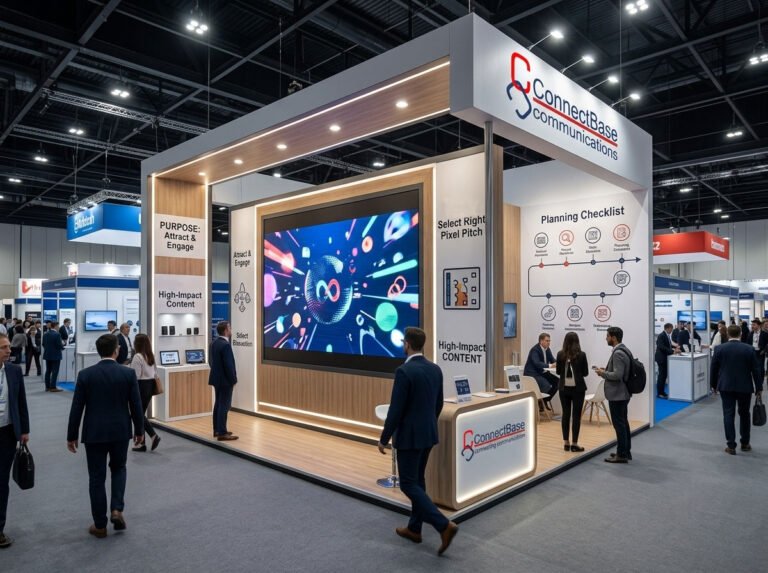
A stall that is built only for display makes networking harder. If you expect meetings, the layout has to make room for them. The basics are:
Even a 9 or 12 sq m stall can usually fit a standing table and two or three stools if the display is planned around them. On larger raw-space stalls, a semi-enclosed meeting room is common. Our guide on creating private meeting areas without making the stall look closed covers how to do this without shutting off the front. It also helps to think through how visitors move through the stall, so that people arriving for a demo do not crowd those already in a meeting.
When everyone on the stall does everything, visitors get passed around and good contacts slip away. Agree roles before the show opens:
Brief the team on the target list, the key messages and the two or three questions that help qualify a visitor, such as their role, their timeline and what they currently use. Ask staff to keep phones away and avoid eating on the stall; it sounds obvious, but it is the most common reason visitors walk past. Plan breaks in shifts so the stall is never left with only one person at peak hours.
Prepare a short introduction that explains what your company does and who it helps in one or two sentences. Then stop talking and ask questions. Open-ended questions (“What brings you to the show?”, “What are you trying to solve this year?”) reveal far more than a product pitch.
Listen for a reason to continue the conversation later, whether that is a specific project, a sample request or a person they want you to meet. If a visitor is clearly not a fit, be polite and brief so you are free for the next one. Networking also happens away from the stall: seminars, organiser receptions and even lunch queues are places where conversations start more easily than in a busy aisle.
A pile of visiting cards with no notes is hard to follow up. Whatever method you use, record the same few details for each contact while the conversation is fresh:
You can do this with a shared spreadsheet, a form on a tablet, a lead-scanning app if the organiser offers one, or a printed sheet stapled to each card. The tool matters less than doing it consistently. Many exhibitors also keep a QR code on the counter that opens a contact form or a WhatsApp chat, which is quick for visitors who do not carry cards. A stall planned with lead capture in mind makes this easier; our article on how stall design helps generate business leads looks at that side in more detail.
Most of the value from networking is created after the show closes. Set aside time in the first week back for follow-up before regular work takes over.
Finally, review the show as a team. Count meetings held, qualified leads and follow-ups completed, and note what worked in the layout and staffing. Those notes make the next show’s planning, and the next stall brief, much sharper.
Networking works best when the plan, the people and the space are aligned. If meetings are a priority, tell your stall designer early, so the layout includes a greeting point, seating and storage from the first drawing rather than as an afterthought. Connectbase Communications has been planning exhibition stall designs around how exhibitors actually use their space since 2009.
If you are preparing for an upcoming show and want a stall laid out for meetings and conversations, contact our team or call +91 7600576410.
 +91 7600576410